AI's New Vision: Automating Your Physical Operations
AI is moving beyond digital tasks. Computer vision and embodied AI are now optimizing physical operations for small businesses. Get the ROI.

AI isn't just for chatbots anymore. It's moving into the physical world. We're past the hype cycle of generative AI. The real win for small businesses? Automating physical operations with AI that can see and understand your real-world environment. This isn't theoretical. It's deployed, driving serious ROI for businesses that move fast.
AI's Eyes on the Ground: The Computer Vision Imperative
Forget spreadsheets and manual checks. Computer vision is fundamentally changing how businesses monitor and manage physical assets. Retail has already clocked massive productivity gains by automating shelf tracking. They're cutting billions in losses from in-store execution failures.
What does this mean for your service business? It means AI can now perform repetitive visual tasks with unmatched accuracy and scale.
Consider:
- Inventory Management: AI-powered image recognition can track tools on trucks, parts in a warehouse, or supplies in a dental office. Optimize stock levels. Reduce waste. Boost efficiency.
- Quality Control: Technicians snap photos of their work. AI validates against standards in real-time. This isn't just error detection; it's predictive insight, flagging compliance risks and forecasting issues before they escalate.
- Site Assessments: For HVAC or plumbing, AI can analyze customer-submitted photos or videos for preliminary diagnostics. Real estate agents could use it for rapid property condition assessments. Fewer wasted trips. Faster service.
This is about building resilient operational pipelines. It’s about replacing human fatigue with machine consistency. The output? Measurable cost reduction and revenue uplift.
Embodied AI: Understanding Your Environment
Beyond static image analysis, embodied AI is the next frontier. Startups are raising massive capital to train AI using billions of real-world videos. This isn't just about recognizing objects; it's about AI understanding context, interaction, and dynamic environments.
Think about it: AI agents that can perceive, reason, and act through physical interaction. This means:
- Predictive Maintenance: IoT sensors combined with AI vision identify patterns signaling equipment failures before they happen. For an HVAC company, this means scheduling maintenance proactively, minimizing unplanned downtime and emergency repairs.
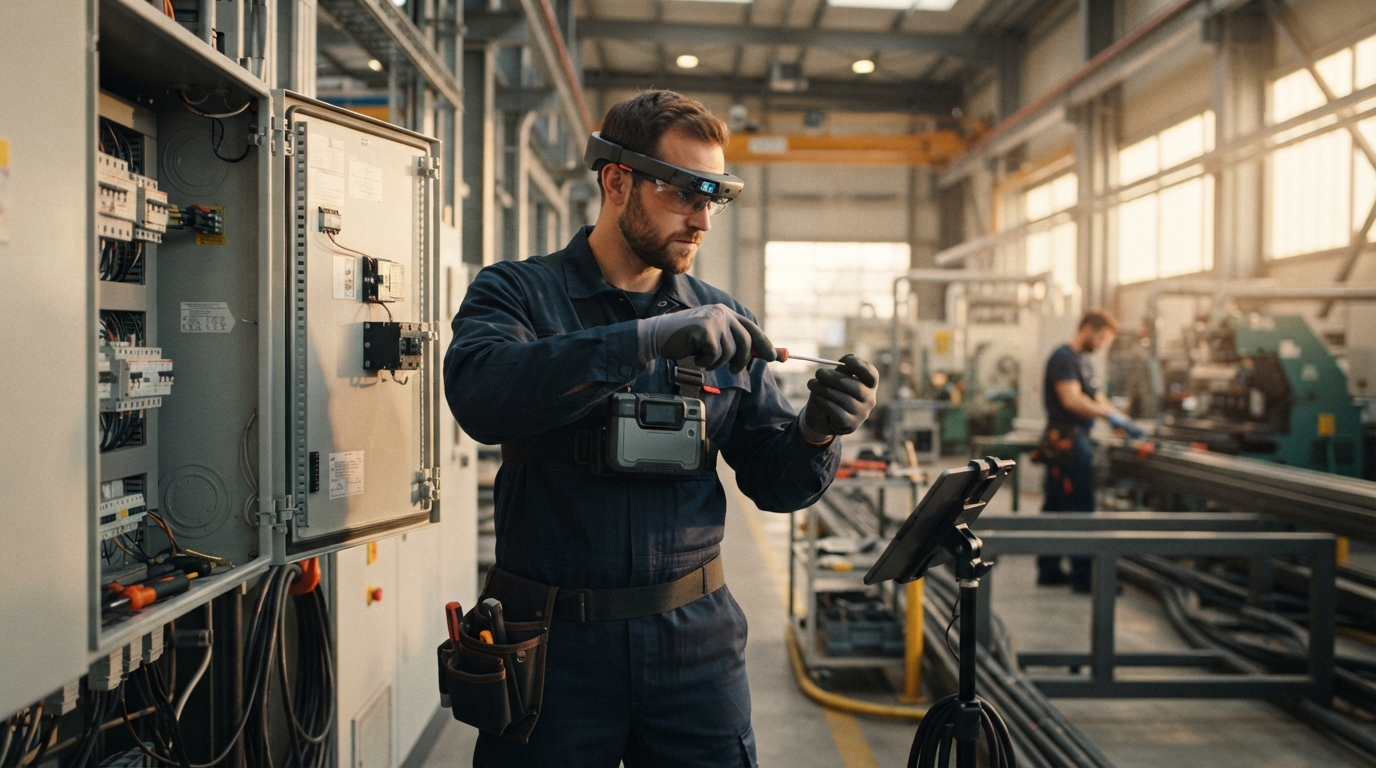
- Field Service Optimization: Equip your technicians with AI-powered mobile apps. They get step-by-step instructions, diagrams, and even AR overlays for complex repairs. AI can even draft work orders automatically from customer requests.
- Worksite Safety & Compliance: AI vision systems can monitor job sites for PPE compliance, detect falls, or ensure proper loading procedures. Real-time alerts mitigate risks and improve safety.
This moves beyond simple automation. It builds an intelligent operational ecosystem where your physical assets and field teams are continuously optimized. It's about empowering your team with real-time, context-aware intelligence, not replacing their judgment.
The Cost Equation: Build Smart, Not Just More
Big tech players are spinning off AI video teams due to costs. Other AI inference startups are raising billions. This signals a maturing market: AI is powerful, but it’s not cheap to build at scale.
For small businesses, this is a critical lesson: Don't chase every shiny object. Focus on pragmatic, high-ROI implementations.
- Start Lean: Off-the-shelf AI tools can cost $50-$500/month. Custom integrations, where real value often lies, start around $5,000-$30,000. The key is to validate the concept with smaller investments before scaling.
- Measure Everything: A repeatable, low-friction ROI framework is non-negotiable. Define baseline metrics: time, cost, error rates. Run a short pilot (90 days is often enough). Calculate payback. Most small businesses see AI automation ROI fastest in workflows tied to revenue capture or labor hours, with paybacks often in 3-12 months.
- Focus on Integration, Not Just Models: The expensive part isn't the AI model itself; it's the development time to build the system that calls the API correctly, handles errors, and presents results. Data readiness and integration work are often the biggest cost drivers.
We're not advocating for massive, speculative investments. We're advocating for strategic automation that delivers clear, quantifiable returns. This is where you leverage our automation services to build custom pipelines that fit your precise needs without the enterprise-level bloat.
What This Means For Your Business
The shift to physical-world AI is a game-changer for service businesses in Albuquerque and beyond. It's about optimizing the workflows you run every single day.
Practical Applications:
- HVAC & Plumbing: Pre-qualify service calls by analyzing customer-submitted photos of issues. Automate truck inventory checks. Implement AI-driven quality assurance for installations and repairs.
- Dental Offices: Automate inventory tracking for supplies. Use computer vision for initial X-ray analysis (as a support tool for dentists). Streamline patient intake with document scanning.
- Restaurants: Reduce waste by monitoring food prep and inventory levels. Optimize customer flow and table turnover using visual data.
- Real Estate: Automate property condition assessments from photos/videos. Enhance virtual tours with AI insights. Qualify leads by analyzing property features.
- Law Firms: While less direct for physical operations, computer vision can aid in organizing and analyzing physical evidence or large volumes of scanned documents.
This isn't about replacing your team. It's about re-architecting roles so humans focus on high-value tasks – client relationships, complex problem-solving, strategic decisions. The AI handles the repetitive, visually intensive grunt work. This is the core of our Vantage Point methodology: aligning human strengths with AI capabilities. When AI automates the mundane, your team can operate within their natural wiring, reducing burnout and increasing overall output.
The Path Forward
The market is clear: AI's capability to understand and interact with the physical world is accelerating. Small businesses that embrace this now will gain a significant edge. This isn't about adopting every new tool. It's about strategic, measured implementation where every AI build delivers clear ROI.
Your next step? Identify those manual visual processes. Find the workflows draining time and introducing errors. Then, build systems that leverage AI's new vision. This is how you scale. This is how you win.
Further reading
Ready to Automate Your Workflows?
We build custom automation systems that eliminate repetitive tasks and free up your team. From intake forms to invoice pipelines — if it's manual, we can fix it.
Related Articles



Zach Witt
Founder, Vantage AI Labs
Ready to Automate Your Workflows?
We build custom automation systems that eliminate repetitive tasks and free up your team.
Get new posts in your inbox
One email when we publish — no spam, unsubscribe anytime.
Before You Build, Understand How You Operate
Our Vantage Point program — in partnership with Elevation180 — uses motivation and conative assessments to ensure the AI systems we build work with you, not against you. See if you qualify for a complimentary assessment.